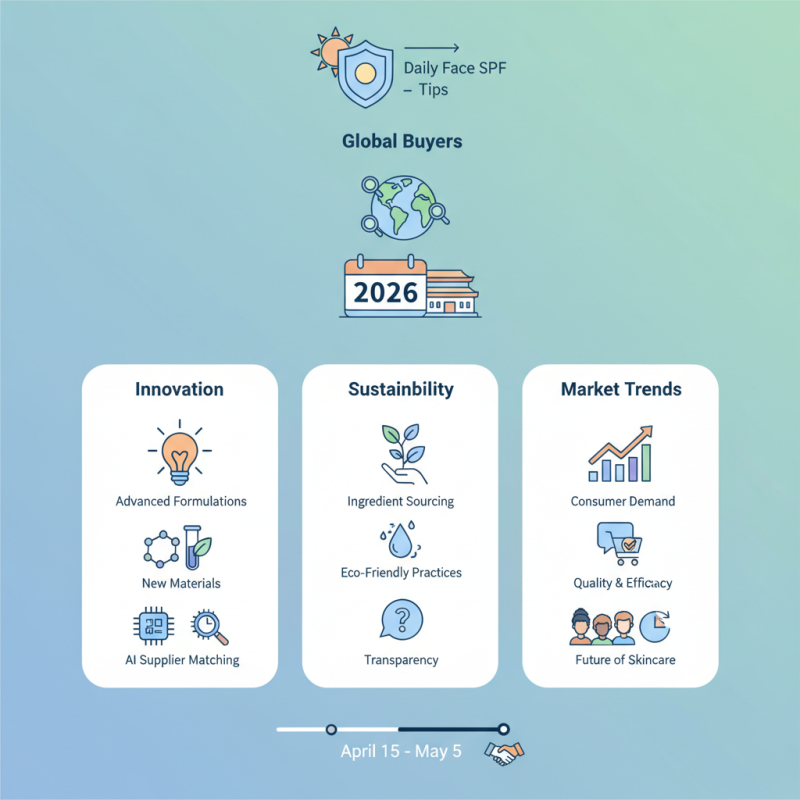
As the 2026 Canton Fair approaches, global buyers are eager to explore innovations in the skincare industry, particularly in the Daily Face SPF sector. John Smith, a renowned expert in sun protection, emphasizes, "Daily Face SPF is not just a trend; it’s essential for long-term skin health." The fair will host a plethora of exhibitors focusing on advanced materials, including those specializing in sunblock products.
During the event from April 15 to May 5, buyers will witness cutting-edge advancements in SPF formulations. The fair’s AI capabilities will help attendees find suppliers with the necessary certifications quickly. This efficiency is vital as consumers become more discerning about product quality and efficacy in sun protection.
However, challenges remain. Many brands still face scrutiny over sustainability practices in ingredient sourcing. Questions about transparency linger. Buyers must engage critically. The rising demand for Daily Face SPF underscores the urgency of these discussions, shaping the future of skincare globally.
As global buyers prepare for the 2026 Canton Fair, understanding SPF (sun protection factor) products is essential. The fair welcomes attendees from various climates, so selecting the right SPF is crucial. Many consumers overlook the importance of sun protection. It’s not just for beach days. UV rays can affect skin health every day of the year, regardless of weather.
When choosing SPF products, consider the spectrum. Broad-spectrum SPF protects against both UVA and UVB rays. Look for products with at least an SPF of 30. It's also important to know how to apply it correctly. A common mistake is not using enough product; aim for a shot glass-sized amount for full body coverage. Reapplication every two hours is key, especially after swimming or sweating.
Buyers should look for innovative formulations. Trends show a rise in lightweight, non-greasy options. Yet, some products may not offer the claimed protection. Testing and certifications are vital. Reflecting on this, attending workshops at the fair can provide insights into making informed choices. Keep in mind personal skin types; not all SPFs suit everyone. Being welleducated is the first step to better skin health.
SPF should be a daily essential in your skincare routine. Sunscreen protects from harmful UV rays. Many people forget to apply it. This can lead to skin damage. Over time, damage may appear as wrinkles or dark spots. Using SPF daily can slow down this process.
Choosing the right SPF is crucial. Look for broad-spectrum options. These provide protection against both UVA and UVB rays. A product with at least SPF 30 is recommended. Reapply every few hours, especially when outdoors. It can be easy to skip this step, but reminders can help. Consider setting a daily alarm on your phone.
It’s also important to remember that SPF needs to be applied generously. Many people don’t use enough. A nickel-sized amount for your face is usually enough. If using makeup, try SPF powders or sprays for touch-ups. This can feel tedious but is essential for protection. Reflect on your routine and ensure SPF is never overlooked.
When exploring face products with sun protection factor (SPF), it's crucial to know which ingredients to prioritize. Look for broad-spectrum protection; this means both UVA and UVB rays are blocked. Common ingredients like zinc oxide and titanium dioxide offer physical protection. They sit on the skin and reflect harmful rays effectively.
In addition, chemical sunscreens like avobenzone and octocrylene absorb UV radiation. These ingredients are lighter and offer a more aesthetic feel. However, they may cause irritation for sensitive skin. Watch for potential allergens. Not all formulations are suitable for everyone, so testing is vital.
Moreover, consider the texture and finish of the product. A lightweight, non-greasy formula is often preferred. Gel or water-based products tend to absorb quickly. Products with added antioxidants can boost skin defense. This is an area that often gets overlooked, but it can enhance your daily skincare routine. Finding the right balance of SPF and other beneficial ingredients can take time. Don't hesitate to try different options.
| Key Ingredients | Benefits | Recommended SPF Range | Skin Types | Application Tips |
|---|---|---|---|---|
| Zinc Oxide | Provides broad-spectrum protection against UVA/UVB rays | 30 - 50 | Sensitive, Dry | Apply 15 minutes before sun exposure, reapply every 2 hours |
| Titanium Dioxide | Gentle on skin, effective against UV rays | 30 - 50 | Normal, Combination | Use a dime-sized amount for the face, and blend well |
| Avobenzone | Provides protection against UVA rays | 30 - 50 | Oily, Acne-Prone | Layer under makeup for added sun protection |
| Octisalate | Improves stability of sunscreen formulas, adds moisturization | 20 - 30 | All Skin Types | Apply generously and reapply after swimming or sweating |
| Octocrylene | Helps enhance SPF performance and stability | 30 - 50 | Dry, Normal | Use in conjunction with other SPF products for best results |
As global awareness of skin protection rises, understanding SPF regulations is essential for buyers. According to the Global SPF Market Report, compliance with evolving standards will shape how products are developed and marketed. In 2025, nearly 70% of consumers will prioritize SPF ratings influenced by regional regulations.
Different markets, such as the EU and the US, have distinct guidelines for SPF products. For example, in Europe, there's a focus on the broad-spectrum protection claims. Meanwhile, the FDA requires specific testing methods for effectiveness. These differences can confuse buyers and manufacturers alike. It's crucial to stay informed about the latest regulatory updates, as failing to comply may lead to penalties.
Product choices are directly affected by these regulations. For instance, companies must ensure lab-tested formulations align with consumer safety expectations. Yet, addressing compliance can be a challenge. Many brands face difficulties in meeting both customer needs and legal requirements. As a result, ongoing education about global standards will be necessary for success in this evolving market.
At the 2026 Canton Fair, the trends in SPF product packaging are set to take center stage. As global buyers seek innovative solutions, brands are rethinking how they present their sun protection products. Sustainable materials are in high demand. Eco-friendly packaging is not just a trend; it’s a necessity for many consumers. Bright colors and unique shapes draw attention, but how effective are they in communicating the product's benefits?
Marketing strategies are equally evolving. The focus has shifted to creating a narrative around skincare that resonates with different cultures. Visual storytelling is a powerful tool. Brands must tailor their messages to diverse audiences while still conveying the importance of SPF. It’s not just about selling a product; it’s about fostering a lifestyle. However, there is a risk in overpromising results. Some companies might rush to market their products without sufficient research. Transparency is vital, and understanding consumer needs is essential.
In this competitive landscape, opportunities abound for brands willing to adapt. Engaging with international markets requires being sensitive to local customs. One misstep in messaging could lead to consumer backlash. As trends continue to develop, it’s crucial for brands to reflect on their strategies and be open to change. The goal should be to align packaging and marketing with actual consumer values, rather than just following trends.
When applying SPF, consider your local climate. High humidity levels can alter how sunscreen interacts with your skin. In tropical areas, sweat may wash away the product, reducing its effectiveness. More frequent reapplication is essential in these conditions. Choose a water-resistant formula if you anticipate swimming or sweating.
In dry climates, sunscreen is vital to prevent skin damage. Even limited sun exposure can cause harm. A thicker application may be necessary here to maintain moisture. Experiment with your technique. Sometimes a spray can miss spots. A cream may offer more thorough coverage.
Don't forget about layering products. If using foundation or moisturizer with SPF, verify their effectiveness. Relying solely on makeup may not provide enough protection. Apply a dedicated sunscreen first for optimal results. Remember, finding the right product and application method involves trial and error. Stay mindful of how your skin responds to different conditions.
: SPF protects skin from harmful UV rays. It helps prevent wrinkles and dark spots.
Reapply every few hours, especially outdoors. Setting reminders can help you remember.
A nickel-sized amount is usually sufficient. Most people do not apply enough.
Look for broad-spectrum protection. Zinc oxide and titanium dioxide are effective ingredients.
Yes, chemical sunscreens may cause irritation. Testing different products is essential for sensitive skin.
Lightweight and non-greasy formulas are often favored. Gel or water-based products absorb quickly.
Eco-friendly packaging is increasingly essential. Bright colors may attract attention but should convey product benefits.
Brands must avoid overpromising results. Transparency and understanding consumer needs are critical.
Many simply forget to apply it. Reflecting on your routine can help ensure SPF usage.
Products with added antioxidants boost skin defense. This is often an overlooked aspect of skincare.
The article "Daily Face SPF Tips for Global Buyers at 2026 Canton Fair" emphasizes the critical role of daily face SPF in skincare routines. It outlines the importance of incorporating SPF into everyday practice to protect against harmful UV rays, which can cause skin damage and premature aging. Buyers at the Canton Fair are guided on essential SPF ingredients to seek in products, ensuring they are well-informed in selecting effective options for diverse climates and skin types.
Additionally, the article addresses global regulations and standards that influence product choices, highlighting the need for compliance in international markets. It also explores innovative trends in SPF product packaging and marketing strategies tailored for global consumers. To maximize the benefits of daily face SPF, practical application tips are provided, taking into account varying environmental conditions. Ultimately, this guidance aims to empower buyers to make educated decisions while navigating the world of SPF products at the Fair.
AJD Skincare