Why Does Sun Exposure Cause Skin Aging?

Time:2026-11-01 Author:Charlotte
0%

Sunlight can make an ordinary walk feel harmless, yet ultraviolet (UV) rays affect skin even when the day seems mild. Repeated exposure can damage collagen and elastin, the proteins that help skin stay firm and flexible. UVA rays reach deeper skin layers, while UVB rays are a major cause of sunburn. Both contribute to skin damage over time. Damage can be quiet. Gradually, skin may develop fine lines, uneven tone, rough patches, or sunspots. These changes vary with skin type, location, exposure, and other factors, so they do not appear identically in everyone.

So, why does sun exposure affect skin aging? The short answer is that UV exposure can injure skin cells and weaken the structures that support the skin. The body repairs some damage, but repeated exposure can outpace that repair. This article explores how UV rays affect skin, why changes can build slowly, and which visible signs may be linked to long-term exposure. The picture is not perfectly simple: natural aging, genetics, and lifestyle also influence how skin changes. A sunny afternoon alone cannot explain every line or spot. Practical protection—such as shade, protective clothing, and broad-spectrum sunscreen—can help reduce further exposure. No single measure removes all risk. If a spot changes, bleeds, or does not heal, a qualified health professional can assess it.
Why Does Sun Exposure Cause Skin Aging?

Sunlight’s UV Mix: UVA Accounts for About 95% of UV Reaching Earth (WHO)

Sunlight is not one uniform beam. The World Health Organization estimates that UVA makes up about 95% of the ultraviolet radiation reaching Earth’s surface. That figure describes the mix, not the total amount of UV on any particular day. Clouds, time, season, and surroundings all affect exposure. A bright reflection from a window or pavement can make an ordinary afternoon less ordinary.

UVA waves reach deeper into the skin than UVB waves. Over time, repeated exposure can damage collagen and elastin, the structures that help skin feel firm and spring back. The visible changes may include fine lines, uneven tone, and a leathery texture. That matters. UVB is more closely linked with sunburn, but UVA can still harm skin without an obvious burn. No redness does not mean no exposure.

The 95% figure is easy to misread as meaning UVA is harmless or that UVB is negligible. Neither is true. Both types can contribute to skin damage, and their effects depend on dose and circumstances. Window glass blocks much UVB but may allow some UVA through, so long hours near a sunny window can matter. Broad-spectrum sunscreen, shade, and protective clothing can reduce exposure, though protection is never perfect. The number helps explain the risk; it does not predict exactly what will happen to one person’s skin.

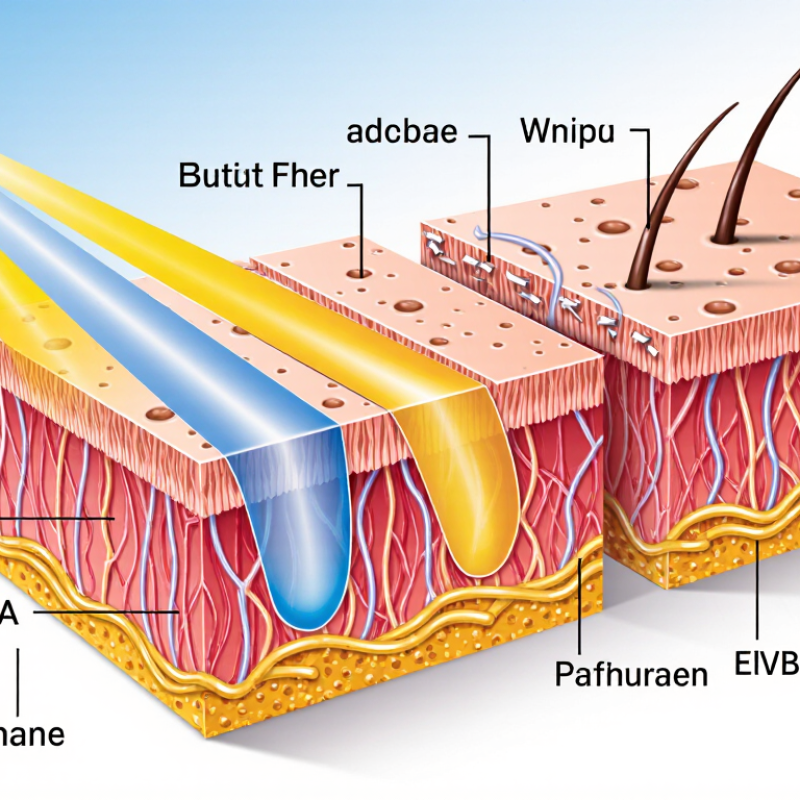
How UVA Reaches the Dermis While UVB Mainly Affects the Epidermis

Sunlight ages skin beyond visible burns. The World Health Organization estimates that UVA accounts for roughly 95% of solar ultraviolet radiation reaching Earth’s surface. That matters. UVA penetrates into the dermis, where collagen and elastin support the skin. Repeated exposure produces reactive oxygen species and activates enzymes that break down collagen. Over time, fine lines, laxity, and uneven pigmentation may appear.

UVB is absorbed more strongly in the epidermis, the skin’s outer layer. It can directly damage DNA and trigger redness or sunburn. That neat split is useful, but imperfect: UV effects are not separated by a hard boundary.

A study of 298 women estimated that sun exposure accounted for about 80% of visible facial aging signs in that group. Flament and colleagues reported the findings in 2013 in Clinical, Cosmetic and Investigational Dermatology. It is a group estimate, not a forecast for every face. A window-side commute may feel uneventful, yet repeated UVA exposure still adds up.

How UV-Induced Oxidative Stress and DNA Damage Disrupt Skin Repair

Why Does Sun Exposure Cause Skin Aging?

How UV-Induced Oxidative Stress and DNA Damage Disrupt Skin Repair

Sunlight reaches living skin cells in different ways. UVA penetrates deeper into the dermis, where reactive oxygen species can damage cell structures and activate enzymes that break down collagen. UVB more often injures the outer skin and can create direct DNA lesions. The result may show up as rough texture, fine lines, and uneven pigment. Small damage accumulates.

Skin cells can repair some DNA injury, but repair is not flawless. Repeated UV exposure can overwhelm these systems, leaving mutations or triggering persistent inflammation and cellular senescence. Damaged fibroblasts may produce less healthy collagen, while existing collagen becomes fragmented. The process is gradual, and its pace varies with exposure, skin type, and other factors.

WHO reported about 1.5 million non-melanoma skin cancer cases worldwide in 2020. That figure measures disease, not skin aging, but it illustrates UV radiation’s wider biological impact (WHO, Global Health Estimates, 2020).

The repair story is not perfectly tidy: laboratory findings explain mechanisms, but they cannot predict exactly how one person’s skin will age.

Tips: Seek shade when UV levels are high, wear covering clothing, and use broad-spectrum sunscreen on exposed skin. Reapply after swimming or sweating, following the product directions. A cloudy day is not a guarantee; UVA can still reach skin.

Why Collagen Breakdown and Elastin Damage Lead to Wrinkles and Roughness

Sun exposure can change skin beneath the surface, even when a burn never appears. UVA rays reach the dermis, where collagen gives skin much of its support. UV exposure increases enzymes that break down collagen and can interfere with its renewal. The scaffolding becomes less orderly over time.

Elastin helps skin stretch and spring back. Repeated UV damage can disrupt these fibers, while abnormal elastic material may build up in the dermis. The result can be fine lines, deeper wrinkles, and a rougher, less even texture. Sunlight is not the only cause; age, smoking, and other factors also affect skin. Still, daily exposure adds up—often so gradually that it is hard to notice until old photographs make the change clearer. Skin does not age at the same pace for everyone, either.

Tips: Choose broad-spectrum SPF 30 or higher, and reapply about every two hours outdoors, or after swimming or sweating. A hat, closely woven clothing, and shade can help limit exposure. No sunscreen blocks every ray, so combine these habits. If a skin change is new or concerning, ask a qualified health professional.

Why Sun Exposure Ages Skin

Approximate share of the Sun’s ultraviolet radiation that reaches Earth’s surface

Why it matters: UVA penetrates into the dermis, where it can trigger oxidative stress and enzymes that break down collagen. UVB acts mainly in the outer skin and causes direct DNA damage and inflammation. Repeated exposure can disrupt collagen and elastin, contributing to wrinkles and rough skin texture.

The proportions are approximate and vary with atmospheric and geographic conditions. Both UVA and UVB contribute to skin damage.

A Clinical Estimate: Sun Exposure Accounts for 80.3% of Visible Facial Aging in Women Aged 40–50 (Flament et al., 2013)

Why does sun exposure cause skin aging? Ultraviolet radiation damages skin cells and the supporting collagen and elastin that keep skin firm. UVA penetrates into deeper skin layers, while UVB contributes to sunburn and surface damage. Over time, repeated exposure can leave fine lines, uneven pigmentation, and rough patches. The changes build quietly, even when the day feels cool.

A clinical estimate puts the sun’s contribution at 80.3% of visible facial aging among women aged 40–50. Flament and colleagues reported this figure in a 2013 study of clinical signs of facial aging. It is a striking estimate, not a prediction for every woman or a claim that sunlight explains every wrinkle. Exposure histories, skin tone, habits, and other aging factors differ. Still, the number makes daily exposure hard to dismiss. A short walk at midday, repeated across years, adds up.

The World Health Organization identifies ultraviolet radiation as a cause of premature skin aging and recommends limiting exposure. Shade helps. So do protective clothing and broad-spectrum sunscreen on exposed skin. These steps cannot reverse all existing changes, and protection is easy to forget on cloudy days. That is the uncomfortable part: prevention is ordinary, repetitive, and imperfect. Consistency matters more than a single careful afternoon.

FAQS

How does sunlight contribute to wrinkles?

Ultraviolet rays can damage collagen, which helps support the skin. Repeated exposure may also disrupt elastin, the fibers that help skin spring back. Changes build gradually.

Can skin change without a sunburn?

Yes. UVA can reach deeper skin layers without causing an obvious burn. A cool or cloudy day does not necessarily mean exposure is absent.

What skin changes may follow repeated exposure?

Fine lines, deeper wrinkles, uneven pigmentation, and rough patches can develop. These changes vary between people.

Does sunlight explain every wrinkle?

No. Age, smoking, personal habits, and other factors also affect skin. Sun exposure is one contributor, not a complete explanation.

What does the 80.3% estimate mean?

A 2013 clinical study estimated that sun exposure accounted for 80.3% of visible facial aging in women aged 40–50. It is an estimate, not a prediction for every person.

What daily habits can help limit exposure?

Choose broad-spectrum SPF 30 or higher, and reapply about every two hours outdoors. Reapply after swimming or sweating, too. A hat, close-woven clothing, and shade can help.

Does sunscreen block every ray?

No sunscreen blocks every ray. Combine it with clothing and shade for more complete protection. I may still forget on cloudy days.

Can these habits reverse existing skin changes?

They cannot reverse every change that has already occurred. If a skin change is new or concerning, ask a qualified health professional. Old photographs can make gradual changes easier to notice.

Conclusion

Sunlight contains a mix of ultraviolet rays, and about 95% of the UV radiation that reaches Earth is UVA, according to the World Health Organization. UVA can penetrate into the skin’s dermis, while UVB mainly affects the outer epidermis. Both types can contribute to oxidative stress and DNA damage, interfering with the skin’s ability to repair itself. This helps explain why does sun exposure affect skin aging: repeated exposure can gradually weaken the structures that keep skin resilient and smooth.

Over time, damage to collagen and elastin can contribute to wrinkles, roughness, and other visible changes. The effects build up with repeated exposure rather than appearing all at once. One clinical estimate suggests that sun exposure accounts for 80.3% of visible facial aging among women aged 40–50, highlighting how strongly cumulative UV exposure may influence the skin’s appearance.

Charlotte

Charlotte

Charlotte is a seasoned marketing professional with a deep understanding of the company's portfolio and a passion for elevating its presence in the market. With a keen eye for detail and a commitment to excellence, she ensures that our professional blog is regularly updated with insightful articles......